
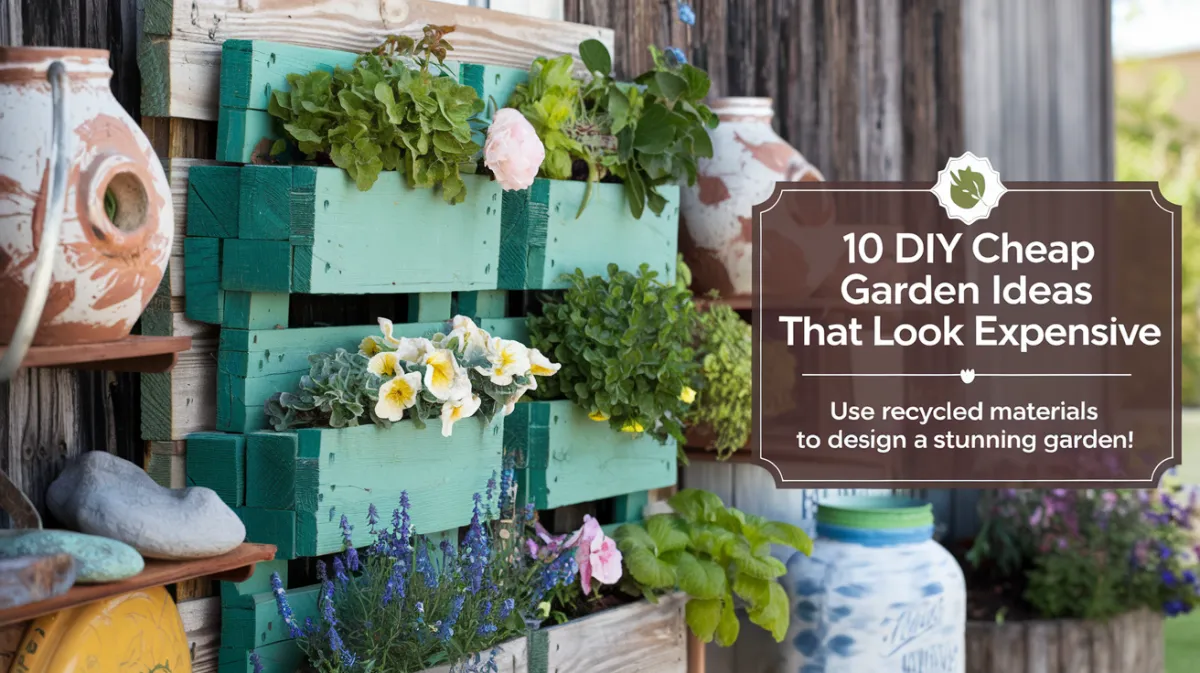
10 DIY Cheap Garden Ideas That Look Expensive
Just a heads up — this website includes affiliate links, and occasionally I receive products from brands to try out. As an Amazon Associate, I earn from qualifying purchases. Some content on this site was created with help from AI tools.
If you have ever scrolled through Pinterest or Facebook and thought, “Well, that sure is pretty… but there is no way I can afford that,” you are not alone. Those picture-perfect gardens can make you feel like you need deep pockets and a professional landscaper just to have something nice.
But let me tell you a little secret. You do not.
Most of us are working with real budgets, real bills, and a whole lot of other things that come before fancy flower beds. And that is exactly why I fell in love with doing things the DIY way.
With a little creativity, a few thrifted finds, and some good old-fashioned elbow grease, you can turn the simplest yard into something beautiful without spending a fortune.

In this post, I am sharing 10 cheap garden ideas that look expensive, but are actually easy on the wallet. These are practical, budget-friendly projects using things you can reuse, repurpose, or pick up for next to nothing.
So grab your coffee, roll up your sleeves, and let’s make your garden look like a million bucks… on a bargain budget. 🤍🌱
The Beauty of Affordable Gardening
Let me tell you something. You do not need a big budget to have a beautiful garden. You need a little creativity, a willingness to try things, and the confidence to work with what you already have.
Some of the prettiest gardens I have ever seen were built slowly, piece by piece, with thrifted finds, hand-me-downs, and a whole lot of love.
When you stop trying to copy expensive setups and start using what is around you, your garden becomes more personal. More meaningful. More yours.
And honestly? That is what makes it special.
Start With What You Already Have
Before you spend a dime, take a good look around your house, shed, and yard. You might be surprised at what you already own.
↪️ Take Inventory First
Look for old pots, buckets, baskets, containers, scrap wood, or forgotten garden supplies. Half the time, the good stuff is already sitting in a corner somewhere.
↪️ Think Outside the Box
Things like tin cans, mason jars, old chairs, ladders, or tables can become beautiful garden features with just a little imagination. If it holds dirt, holds plants, or adds character, it can probably be used.
↪️ Upcycle for Extra Charm
Wooden crates, pallets, old dishes, and worn-out furniture can be turned into planters, shelves, and displays. These little homemade touches are what give your garden that cozy, rustic feel.
The Power of Recycled Materials
Using recycled materials is not just good for your wallet. It is good for the planet too. And it fits perfectly with that old-fashioned, make-do farmhouse mindset.
Here are some of my favorite ways to reuse what you already have:
↪️ Wooden Pallets
Old pallets can be turned into vertical gardens, compost bins, benches, or raised beds. They are sturdy, free if you look around, and full of possibilities.
↪️ Broken Dishes and Ceramics
Instead of tossing chipped plates or broken pots, use the pieces to make mosaics for stepping stones, borders, or planters. It adds color and personality without costing a thing.
↪️ Old Tires
Paint them, stack them, and turn them into fun planters or flower beds. They work great for vegetables and flowers and add a playful touch to the yard.
↪️ Glass Bottles
Empty bottles can be buried upside down to create beautiful edging along garden beds. When the sun hits them, they sparkle like little jewels in the dirt.
When you start seeing “junk” as “potential,” everything changes. Your garden becomes a place of creativity instead of expense.
And that is when gardening gets really fun.

Why Frugal Garden Hacks Work
Frugal gardening is not about being cheap. It is about being smart. It is about using what you have, stretching your dollars, and building something beautiful without putting yourself in a financial hole.
When you do things yourself, your garden starts to tell your story. It is not copied from a store display. It is built with your hands, your ideas, and your hard work.
And honestly, those are the gardens people remember.
They have personality.
They have heart.
They have history.
You cannot buy that in a cart at the garden center.
Creating a Budget-Friendly Plan
Before you start hauling dirt and buying plants, it helps to have a simple plan in your head.
↪️ Focus on What Matters Most
Pick one or two areas to work on first. Maybe it is a sitting spot, a pathway, or your main flower bed. When those look good, everything else feels better too.
↪️ Map It Out First
You do not need fancy software. A piece of paper and a pencil works just fine. Sketch where things will go so you are not guessing halfway through and wasting money.
↪️ Use What You Already Own
Old bricks, boards, pots, buckets, and fencing can all be reused. Half the time, your best materials are already sitting in the shed.
Think Long-Term, Not Just This Season
The best budget gardens are built with the future in mind. A little planning now saves you money and work later.
↪️ Plant Perennials Whenever You Can
Perennials are a frugal gardener’s best friend. Plant them once, and they come back every year. Less buying. More enjoying.
↪️ Make Your Own Compost
Kitchen scraps, leaves, grass clippings, and garden waste can turn into rich soil for free. It takes a little time, but it is worth it.
↪️ Use Homemade Mulch
Instead of buying bags, use what nature gives you. Leaves, grass clippings, and even newspaper help hold moisture and keep weeds down.
When you garden this way, you are not just saving money. You are building something that lasts. Something you can be proud of.
A garden that grows with you.

1. Transform Wooden Pallets Into Vertical Gardens

If you are short on space but still dreaming of a garden full of life, a pallet vertical garden is about to become your new best friend.
This is one of my favorite budget-friendly tricks because it turns something most people throw away into something beautiful. Old pallets can become living walls filled with herbs, flowers, and greenery that look fancy and expensive, even though they cost next to nothing.
They are perfect for small yards, patios, beside sheds, or along fences. And they add that cozy, rustic farmhouse charm that fits right into a cottage-style garden.
Plus, there is something really satisfying about looking at it and thinking, “Yep. I made that.” 😉
How to Turn a Pallet Into a Vertical Garden
You do not need to be handy or have fancy tools for this. Just take it one step at a time.
↪️ Find a Good Pallet
Start by checking local warehouses, garden centers, Facebook Marketplace, or even behind small businesses. Just make sure the pallet is clean and sturdy. Avoid ones that look rotten or soaked in chemicals.
↪️ Clean It Up First
Before you start planting, give the pallet a little love. Sand down rough spots and pull out any old staples or nails. A quick rinse with water helps wash away dirt and dust.
↪️ Add Landscape Fabric
Staple landscape fabric to the back and bottom of the pallet. This is what keeps the soil from falling out when you stand it up. Make sure it is secure, especially along the edges.
↪️ Fill It With Soil and Plants
Lay the pallet flat and fill it with good potting soil. Then tuck in your plants. Herbs, small flowers, strawberries, and leafy greens work great. Pack the soil in gently so everything stays put.
↪️ Set It in Place
Once planted, you can lean your pallet against a wall, fence, or shed, or secure it upright. Let it sit flat for a few days so roots settle in before standing it up if possible.
A pallet garden is proof that you do not need a big yard or a big budget to grow something beautiful. With a little creativity and elbow grease, you can turn “junk” into something that makes your whole space feel special.
Cheap. Practical. Pretty.
That is my kind of gardening.
2. Use Old Tires as Quirky Planters

Let’s be honest. Most of us have at least one old tire sitting somewhere on the property that we keep meaning to deal with “someday.” 😉
Instead of hauling it off or letting it rot behind the shed, you can turn that tire into a fun, colorful planter that looks like you bought it at a fancy garden shop.
Paint it. Stack it. Fill it with flowers.
Suddenly, trash becomes garden décor.
And that is one of my favorite kinds of projects.
Tire planters are perfect if you want to add height, color, and personality without spending much at all. They work great for front yards, back gardens, kids’ spaces, and anywhere that needs a little pop of fun.
How to Turn Old Tires Into Garden Planters
This is one of those projects that looks harder than it actually is.
↪️ Find Some Free Tires
Check with local garages, tire shops, or junkyards. Most are happy to give old tires away because they have to pay to get rid of them anyway.
↪️ Clean and Paint Them
Give the tires a good scrub with soapy water and let them dry. Then paint them with outdoor paint or spray paint. Go bright, go neutral, go farmhouse. Whatever fits your style.
↪️ Stack or Arrange Them
You can use one tire on its own or stack two or three for a taller planter. Play around with the layout until it feels right in your space.
↪️ Fill and Plant
Add good soil, then plant flowers or trailing plants like petunias, sweet potato vine, or ivy. Anything that spills over the edge looks especially pretty.
Tire planters are proof that gardening does not have to be serious all the time. They are fun. They are cheerful. They make people smile.
And best of all, they cost next to nothing.
That is frugal farmhouse gardening at its finest.
3. Make DIY Mosaic Pathways

If you have ever walked through a beautiful garden and thought, “Wow… this looks expensive,” chances are it had a pretty pathway.
A garden path instantly makes your yard feel more finished and put together. And the best part? You do not need fancy stone or pricey pavers to get that look.
With broken tiles, old dishes, or bits of glass, you can create a one-of-a-kind mosaic path that looks like something straight out of a magazine. But really, it is made from thrifted finds and leftovers.
It is creative.
It is personal.
And it tells a story.
Plus, every time you walk on it, you get to think, “I made that.” 😉
How to Make a Mosaic Garden Path
This project takes a little patience, but it is so worth it in the end.
↪️ Gather Your Materials
Start collecting broken tiles, chipped plates, old mugs, or glass pieces. Thrift stores and yard sales are great places to find cheap dishes you do not mind breaking up.
↪️ Prep the Path Area
Decide where your path will go, then dig a shallow trench. Add a layer of sand and level it out. This gives your mosaic a strong base so it does not shift later.
↪️ Arrange Your Design
Lay out your pieces before you glue or grout anything. Play with colors and patterns until it feels right. Leave small spaces between pieces for grout or soil.
↪️ Seal Everything In
Once you are happy with the layout, use outdoor grout to lock everything in place. This protects your path from weather and keeps it looking beautiful for years.
A mosaic path adds instant charm to your garden. It makes people slow down, look around, and enjoy the space a little more.
It turns a simple backyard into something special.
And best of all? It is built with your own two hands and a whole lot of heart. 🤍🌸
4. Build a Compost Bin From Scratch

Let me tell you, once you start composting, you will wonder why you did not do it sooner.
All those veggie scraps, coffee grounds, eggshells, and yard clippings that used to go in the trash? They can turn into rich, beautiful soil for free. And that is a win in my book. 😉
A homemade compost bin is one of the best “cheap but looks fancy” garden upgrades you can make. Not only does it save you money on soil and fertilizer, but it also makes you feel like a real homesteader who has things figured out. Even when you’re still learning. 💛
And you do not need to buy some pricey plastic bin from the store. A few pallets, some wire, and a little elbow grease will do just fine.
How to Build a Simple Compost Bin
This is easier than it sounds, I promise.
↪️ Pick the Right Spot
Choose a shady or partly shady spot in your yard where the bin will not dry out too fast. Somewhere close enough to the house that you will actually use it, but far enough away that it is not in the way.
↪️ Gather Your Materials
Look around first. Old pallets, scrap wood, wire fencing, or even sturdy plastic bins can all work. Pallets are my favorite because they are usually free and easy to find.
↪️ Put the Bin Together
Stand your pallets up to form a box shape, leaving one side open so you can turn and scoop compost easily. Secure them with screws, nails, or wire. It does not have to be perfect. It just has to hold everything in.
↪️ Start Composting
Begin layering “greens” and “browns.” Greens are things like veggie scraps and grass clippings. Browns are dry leaves, cardboard, and paper. Turn the pile every week or so, and let nature do the work.
A good compost bin is like a little garden miracle factory. You throw in scraps and leaves, and a few months later, you have dark, rich soil that makes everything grow better.
Free fertilizer.
Less waste.
Healthier plants.
That is frugal gardening at its finest. 🤍🌱
5. Turn Mason Jars Into Lanterns

There is just something about soft lights in the garden that makes everything feel peaceful and special. When the sun goes down and those little jars start glowing, it feels like you’re living in a storybook.
Mason jar lanterns are simple, cheap, and absolutely beautiful. They turn an ordinary backyard into a cozy evening retreat where you want to sit a little longer, sip your coffee or tea, and enjoy the quiet.
And the best part? You probably already have half the supplies sitting in a cupboard somewhere. 😉
These are perfect for patios, garden paths, outdoor tables, and even hanging from tree branches.
How to Make Mason Jar Lanterns
This is one of those projects you can finish in an afternoon and enjoy all summer long.
↪️ Gather Your Supplies
Grab a few mason jars, some fairy lights or battery candles, and a roll of craft wire. Thrift stores and dollar stores are great places to find extras if you need them.
↪️ Make Simple Handles
Wrap wire tightly around the neck of each jar, then twist the ends together to make a handle. It does not have to be perfect. A little rustic just adds charm.
↪️ Add the Lights
Drop in fairy lights for a soft twinkle or use battery candles for a steady glow. I usually stick with battery lights so I do not have to worry about wind or fire.
↪️ Set Them Out to Shine
Hang them from tree branches, hooks, or pergolas. Or line them along walkways, steps, and garden beds for that dreamy nighttime look.
Mason jar lanterns prove that you do not need expensive outdoor lighting to have a beautiful space. A few jars, a little creativity, and some soft light go a long way.
Cheap. Cozy. Magical.
Just the way a cottage garden should feel.
6. Create Raised Beds With Recycled Materials

Let me tell you, raised beds are one of the best things you can do for your garden. Period.
Less bending.
Less weeding.
Better soil.
Healthier plants.
And you do not need to spend a small fortune to get them.
Some of my best garden beds have been built with old boards, leftover bricks, and whatever was laying around the yard. No fancy kits. No big receipts. Just making it work.
That is real-life gardening.
Raised beds help you stay organized, grow better plants, and actually enjoy working in your garden instead of fighting it.
And when you build them yourself, they look custom and expensive, even though they cost next to nothing.
How to Build Raised Beds on a Budget
This is easier than it looks, I promise.
↪️ Choose What You Have First
Before you buy anything, look around. Old fence boards, scrap lumber, bricks, or cinder blocks all work. Check Marketplace and construction sites too. Free is always best.
↪️ Build a Solid Frame
Lay out your materials in a square or rectangle where you want to plant. Make sure it is level and sturdy. Screw wood together. Stack bricks neatly. Keep it simple.
↪️ Fill It Right the First Time
Put sticks or gravel in the bottom if drainage is an issue. Then add good soil mixed with compost. This step matters more than people think.
↪️ Plant and Let It Grow
Plant what you love. Tomatoes. Lettuce. Flowers. Herbs. Whatever makes you happy. Water it well and enjoy how much easier gardening becomes.
Raised beds make your yard feel more organized and more under control. No more fighting weeds. No more muddy mess.
Just good food, pretty plants, and a garden that works for you.
That is the goal. 🤍🌱
7. Paint Terracotta Pots for a Custom Look

Let’s talk about terracotta pots for a minute.
They are cheap.
They are everywhere.
And they are… kind of boring on their own. 😉
But with a little paint and creativity, those plain orange pots can turn into something that looks custom and expensive.
This is one of my favorite easy projects because you can do it at the kitchen table, with a cup of coffee beside you, and still end up with something that makes your garden look more put together.
And the best part? You get to make them match your style. Bright. Neutral. Farmhouse. Floral. Simple. Whatever you love.
Your garden. Your rules.
How to Paint Terracotta Pots on a Budget
This is simple, relaxing, and honestly kind of fun.
↪️ Clean Them First
Before you paint, give the pots a good rinse and scrub off any dirt. Let them dry completely so the paint sticks properly.
↪️ Paint Your Design
Use outdoor acrylic paint and go to town. Solid colors look clean and classy. Simple stripes, dots, or floral patterns add personality. You do not need to be an artist. Imperfect just adds charm.
↪️ Seal Them Up
Once the paint is dry, spray or brush on a weatherproof sealant. This keeps your hard work from washing away the first time it rains.
↪️ Set Them Out Together
Group your pots in clusters on steps, patios, decks, or along walkways. When they are grouped, they look intentional and expensive.
Painted pots are one of those little touches that make people think, “Wow, she really has this place together,” even if you know there’s laundry waiting inside. 😉
Cheap pots.
A little paint.
Big impact.
That is smart backyard decorating right there.
8. Upcycle a Dresser Into a Planter

If you have ever seen an old dresser sitting by the road and thought, “That seems like such a waste,” this project is for you.
Turning a dresser into a planter is one of those ideas that looks high-end and creative, but is actually made from something most people were ready to throw away. When it is finished, it looks like a piece of living artwork sitting right in your yard.
Each drawer becomes its own little garden bed, and when you fill them with trailing flowers and greenery, everything spills out beautifully. It adds height, texture, and personality in a way that regular pots just cannot.
It is also a great way to give new life to furniture that is too worn out to use inside anymore.
How to Turn a Dresser Into a Planter
This project takes a little time, but it is well worth it when you see the finished result.
↪️ Find the Right Dresser
Look for an old wooden dresser at thrift stores, yard sales, or online. It does not have to be perfect. Scratches and wear just add character. Just make sure it is sturdy and not falling apart.
↪️ Prep the Drawers
Remove the hardware and drill a few holes in the bottom of each drawer for drainage. This step matters, because plants do not like sitting in soggy soil. If you skip this, you will regret it later. 😉
↪️ Add Soil and Lining
Line each drawer with landscape fabric to help hold the soil in place, then fill with good-quality potting mix. Pack it in gently so it stays put when you open the drawers partway.
↪️ Plant for a Cascading Look
Choose flowers and plants that trail and spill over the edges, like petunias, sweet potato vine, or ivy. This is what gives the dresser that soft, layered look that makes it feel special.
A dresser planter is one of those projects that always gets compliments. People notice it. They ask about it. They remember it.
And the best part is knowing you took something forgotten and turned it into something beautiful with your own hands.
That is real DIY gardening. 🤍🌸
9. Make Wine Bottle Garden Edging

Garden borders can get expensive fast, especially when you start looking at stone, brick, or store-bought edging. But here is the thing. You do not actually need any of that to make your garden beds look neat and finished.
Wine bottles make a surprisingly beautiful border, and once they are in the ground, they look intentional and unique. When the sun hits the glass, they catch the light and add a little sparkle to your yard without you spending a dime.
This is also one of those projects that grows slowly over time. You collect bottles here and there, save them up, and before you know it, you have enough to edge a whole bed. No rush. No pressure.
Just slow, steady progress. The homestead way. 😉
How to Create Wine Bottle Garden Edging
This project is simple, but it makes a big visual difference.
↪️ Start Collecting Bottles
Ask friends and family to save their empty wine bottles for you, or grab them from the recycling center if it is allowed. Green and brown bottles tend to look the nicest outdoors, but you can mix colors if you like.
↪️ Dig a Shallow Trench
Along the edge of your garden bed, dig a narrow trench deep enough so the bottles will stand firmly in place. This helps keep them from tipping over later.
↪️ Set the Bottles in Place
Turn the bottles upside down and press them into the soil neck-first. Pack dirt around them tightly so they stay put. Try to keep the spacing even for a clean, polished look.
Wine bottle edging is one of those little touches that makes people stop and look twice. It feels creative. It feels thoughtful. It feels like you really paid attention to your space.
And knowing it cost almost nothing makes it even better.
10. Build a DIY Trellis

If you grow anything that likes to climb, a trellis is one of the best things you can add to your garden. It keeps plants off the ground, helps them grow better, and makes everything look more organized and put together.
And just like everything else in this post, you do not need to buy an expensive one from the store.
With a few pieces of wood, some wire, or even bamboo poles, you can build a sturdy trellis that works just as well and fits your space perfectly.
Whether you are growing peas, beans, cucumbers, clematis, or climbing roses, a homemade trellis gives your plants something to lean on and your garden a little extra charm.
It is practical and pretty at the same time. My favorite kind of project. 😉
How to Build a Simple DIY Trellis
This is one of those projects that sounds fancy, but is actually very doable.
↪️ Choose a Simple Design
Decide what you are working with first. Wooden stakes, scrap lumber, bamboo poles, or mesh wire all work great. Use what you already have when you can.
↪️ Build a Strong Frame
Secure your materials together to form a sturdy shape. It can be tall and narrow, wide and flat, or even arched. It does not have to be perfect. It just has to hold your plants.
↪️ Anchor It Well
Make sure you push or bury the base deep into the soil so it does not tip over in wind or heavy rain. A solid foundation saves you headaches later.
↪️ Plant and Train Your Vines
Once it is in place, plant your climbers at the base and gently guide them as they start growing. After that, nature usually takes over.
A DIY trellis helps your garden grow upward instead of outward, keeps things tidy, and adds structure to your space.
It makes your plants happier.
It makes your garden easier to manage.
And it makes everything look more “finished.”
All without draining your wallet.
That is smart gardening right there. 🤍🌿
A Beautiful Garden on a Real-Life Budget
At the end of the day, a beautiful garden is not about how much money you spend. It is about the love, time, and creativity you put into it.
With a few simple tools, some recycled materials, and a willingness to try new things, you can turn even the most basic yard into something you are proud of. You do not need fancy supplies or a big budget. You just need to start where you are and build little by little.
If you are ready to keep growing, you might also enjoy these ideas:
🌱 For more ways to build beautiful beds without overspending, check out my raised bed garden ideas here:
👉 https://homesteadingonanacre.com/post/raised-bed-garden-ideas
🌿 And if you love growing fresh herbs close to home, you will love these indoor herb garden ideas:
👉 https://homesteadingonanacre.com/post/Indoor-Herb-Garden-Ideas
So roll up your sleeves, grab your gloves, and head outside. Plant what makes you happy. Try new things. Learn as you go.
Because the best gardens are not perfect.
They are loved. 🤍🌱
