
How to Start Seeds Indoors: A Beginner’s Step-by-Step Guide
As I hold a packet of seeds in my living room, I feel excitement and curiosity. Starting seeds indoors is like magic. It connects us to nature in a special way.
Starting seeds can seem hard if you're new to gardening. That's why I've made this guide for you. It will help you from picking the right seeds to making them grow strong under your care.
Key Takeaways
Starting seeds indoors is a fulfilling experience, allowing you to grow plants from scratch in the comfort of your home.
This step-by-step guide is designed to make seed starting accessible and enjoyable for beginners.
You'll learn how to select the best seeds, gather essential supplies, and create optimal growing conditions.
Nurturing seedlings indoors helps overcome challenges such as limited outdoor space and adverse weather conditions.
Prepare to see your seedlings thrive from germination to transplant with ease and confidence.
Why Start Seeds Indoors?
Starting seeds indoors is a great way to start your gardening season. It ensures your garden is healthy and vibrant. Gardeners love the control over growing conditions and the early start it gives.

Benefits of Indoor Seed Starting
Starting seeds indoors saves money and lets you choose from more varieties. You won't have to buy expensive mature plants. Plus, you can find seeds for many more types of plants than what's available at local nurseries.
Control Over Growing Conditions
Indoor seed starting lets you control temperature, light, and humidity. This is key for successful germination and growth. With this control, your plants will be strong and healthy when you transplant them outside.
Getting a Head Start on the Growing Season
Indoor gardening also means starting your growing season early. This is especially helpful in areas with short summers. Your plants will be more mature and ready to thrive when moved outside. With the right tips, you can make your garden more productive.
Choosing the Best Seeds to Start Indoors
Starting seeds indoors for beginners requires picking the right seeds. Some seeds grow better indoors because of their growth habits. Let's look at some popular choices and how to read seed pack information.
Popular Seeds for Indoor Gardening
Many new gardeners wonder which seeds to start with. Here are some top picks:
Tomatoes: These are great for indoor starting because they need a long growing season. Starting them early means a bigger harvest.
Peppers: Both bell and hot peppers do well indoors. They really benefit from a controlled environment.
Herbs: Basil, parsley, and oregano are perfect for indoor gardens. They grow fast and are great for cooking.
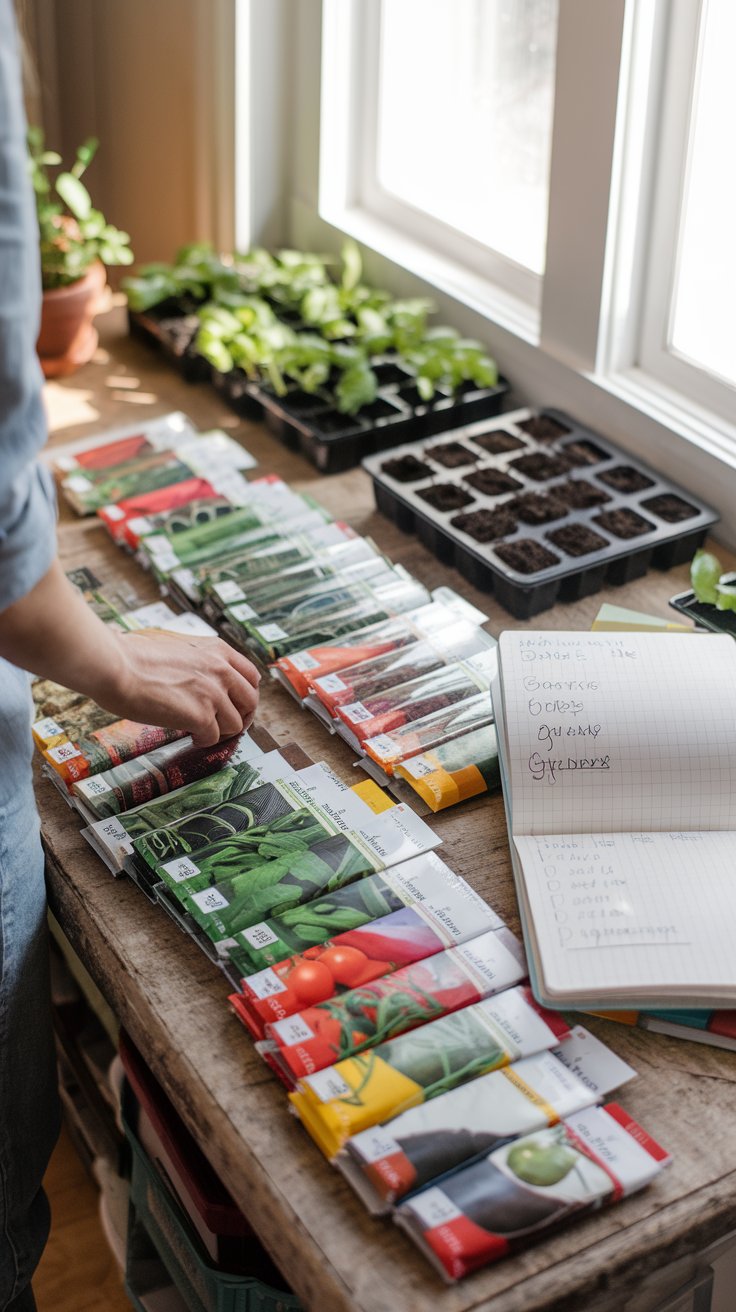
Understanding Seed Pack Information
It's important to understand seed pack details for indoor gardening. Each pack has key info for planting:
Seed Type: Shows if the seeds are hybrids, heirlooms, or genetically modified.
Planting Depth: Tells you how deep to plant the seeds.
Germination Time: Gives an idea of how long it takes for seeds to sprout.
Ideal Growing Conditions: Includes light, temperature, and watering needs.
Knowing these details helps you care for your indoor garden. This ensures your seeds grow well.
Essential Supplies for Starting Seeds Indoors
Starting seeds indoors in small spaces needs the right tools. You'll need seed trays and pots for spacing, quality soil for roots, and grow lights and heating mats for natural conditions.
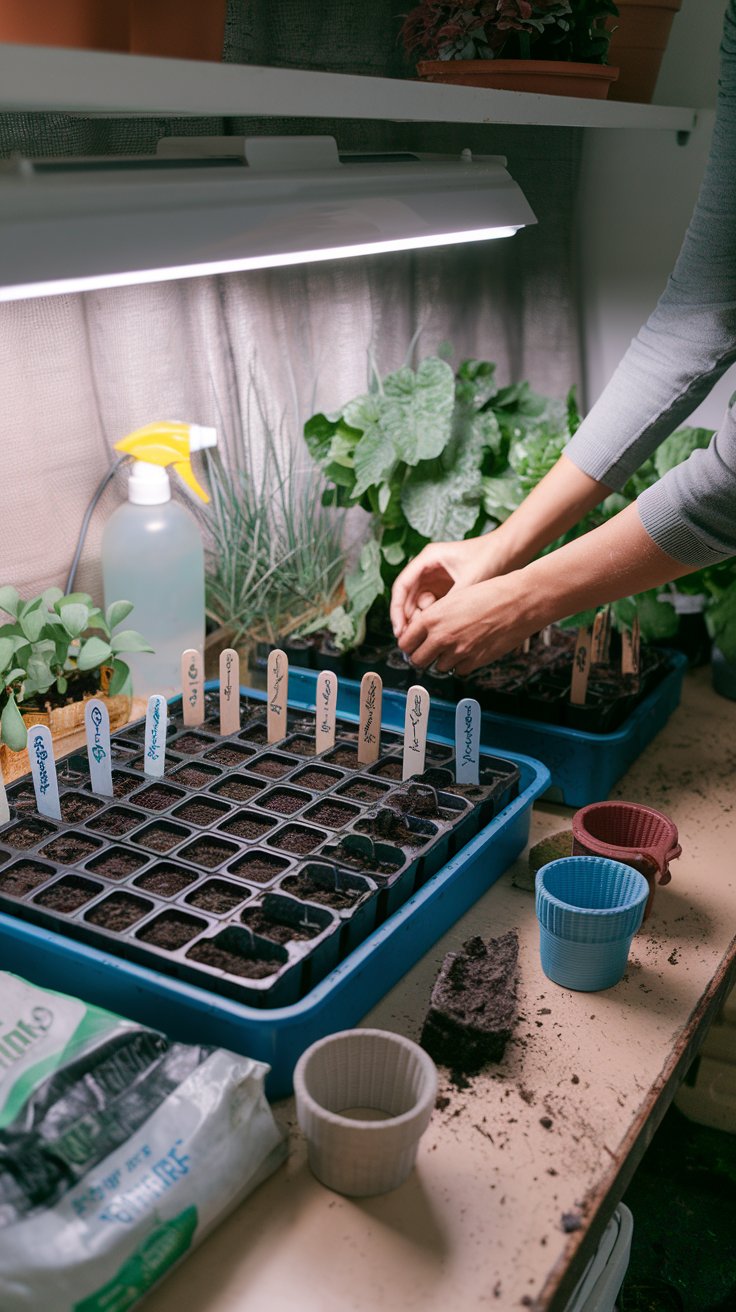
Seed Trays and Pots
Seed trays and pots help organize your space. They give structure and drainage for young plants. They also let you manage many plants without big containers.
Soil and Growing Medium
The right soil is key for starting seeds indoors. Choose mixes made for seed starting. They balance nutrients, moisture, and air for healthy roots and growth.
Grow Lights and Heating Mats
Light and temperature control are crucial indoors. Grow lights mimic sunlight for seedlings. Heating mats keep soil warm for faster germination and growth.
How to Start Seeds Indoors
Starting seeds indoors is a rewarding journey. It starts with picking the right seeds. Choose varieties like tomatoes, peppers, and herbs like basil. Each seed packet has important info, like how long it takes to germinate and what temperature it needs.
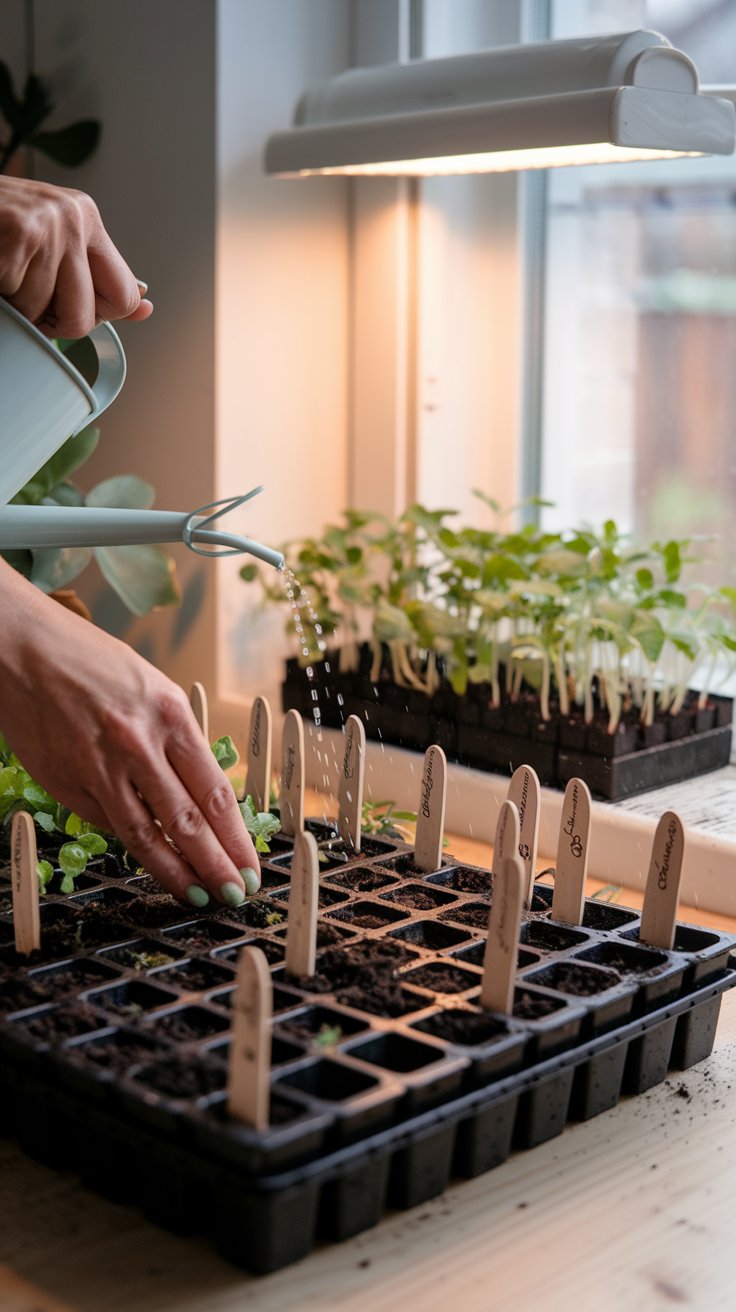
After picking your seeds, get the necessary supplies. You'll need seed trays, pots, and good soil. Make sure the soil drains well for healthy roots. Also, get grow lights to give your seedlings the light they need.
Seed trays and pots
High-quality soil mix
Grow lights
Heating mats
Creating the right environment is key. Put your grow lights a few inches above the trays. Use a timer to mimic day and night. Heating mats under the trays help keep the soil warm, which helps seeds germinate.
Watering is also important. Keep the soil moist but not too wet. Too much water can cause root rot, while too little can prevent seeds from sprouting. A moisture meter can help you keep track.
Pay attention to every detail for a successful start. Happy planting, and watch your seeds grow into strong seedlings!
Preparing the Planting Medium
Preparing the planting medium is key for seed germination success. Let's explore the top indoor seed starting tips for a successful home start.
Choosing the Right Soil
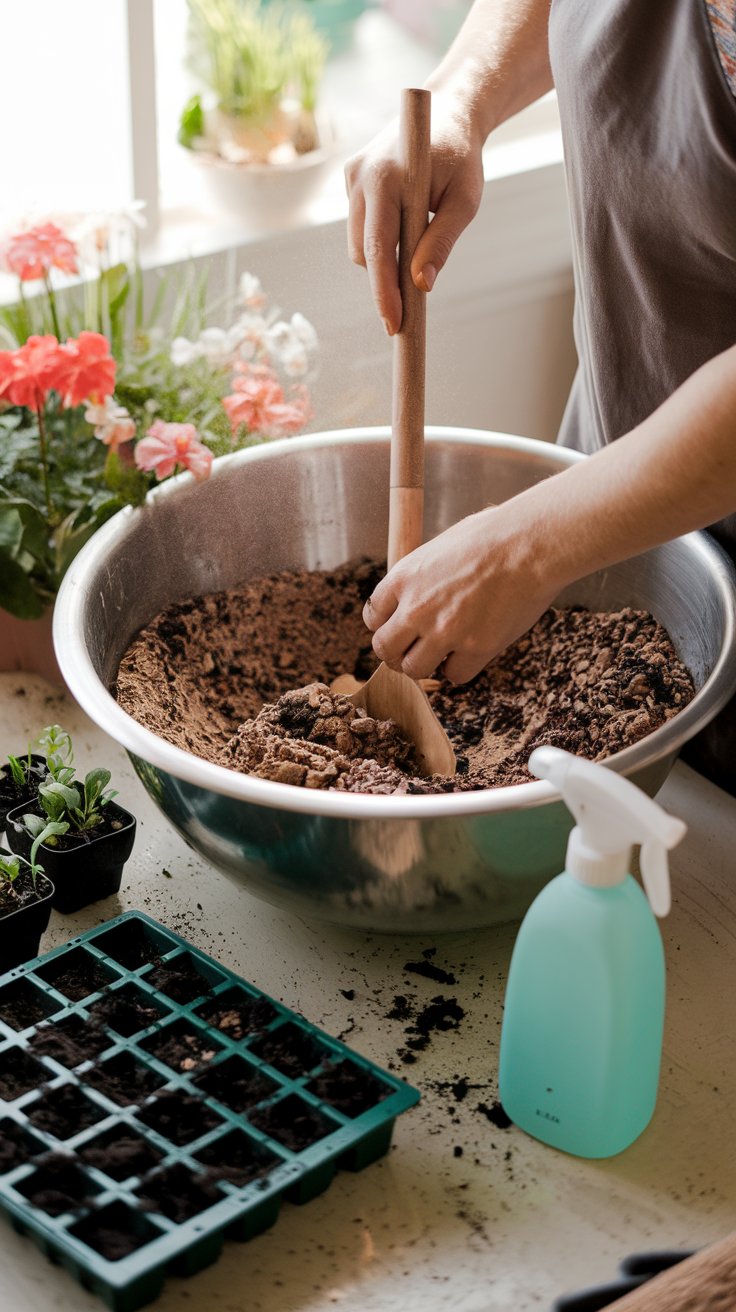
The right soil mix is crucial for starting seeds at home. Use a loose, fertile soil that drains well. A specialized seed starting mix is best. It's designed to support root growth without compacting.
Soil Sterilization Tips
Soil sterilization is vital for indoor seed starting. I sterilize the soil to kill off pathogens and weed seeds. Baking the soil in an oven at 180°F for 30 minutes works well. This step helps your seeds grow in a clean environment.
Moistening the Soil
Moisten the soil before planting, but not too much. It should be damp, like a wrung-out sponge. Too much water can lead to mold. Add water slowly and mix well for even moisture.
Sowing Seeds
Sowing seeds right is key to starting seeds indoors. Knowing how to space and depth them, labeling, and covering them is crucial. It makes gardening a success.
Spacing and Depth Guidelines
Proper spacing and depth are vital. Seeds need room to grow and get nutrients. Planting them too deep or shallow can stop them from growing.
Always check the seed pack for the right depth and spacing. This ensures your seeds grow well.
Labeling Your Seeds
Labeling seeds helps track their growth and keeps your garden tidy. Use waterproof labels or sticks with the plant name and date. It's great for beginners to see how different seeds grow.
Covering the Seeds
After planting, cover seeds with a thin layer of soil or vermiculite. This layer should protect the seeds without blocking their growth. It's a critical step in starting seeds indoors.
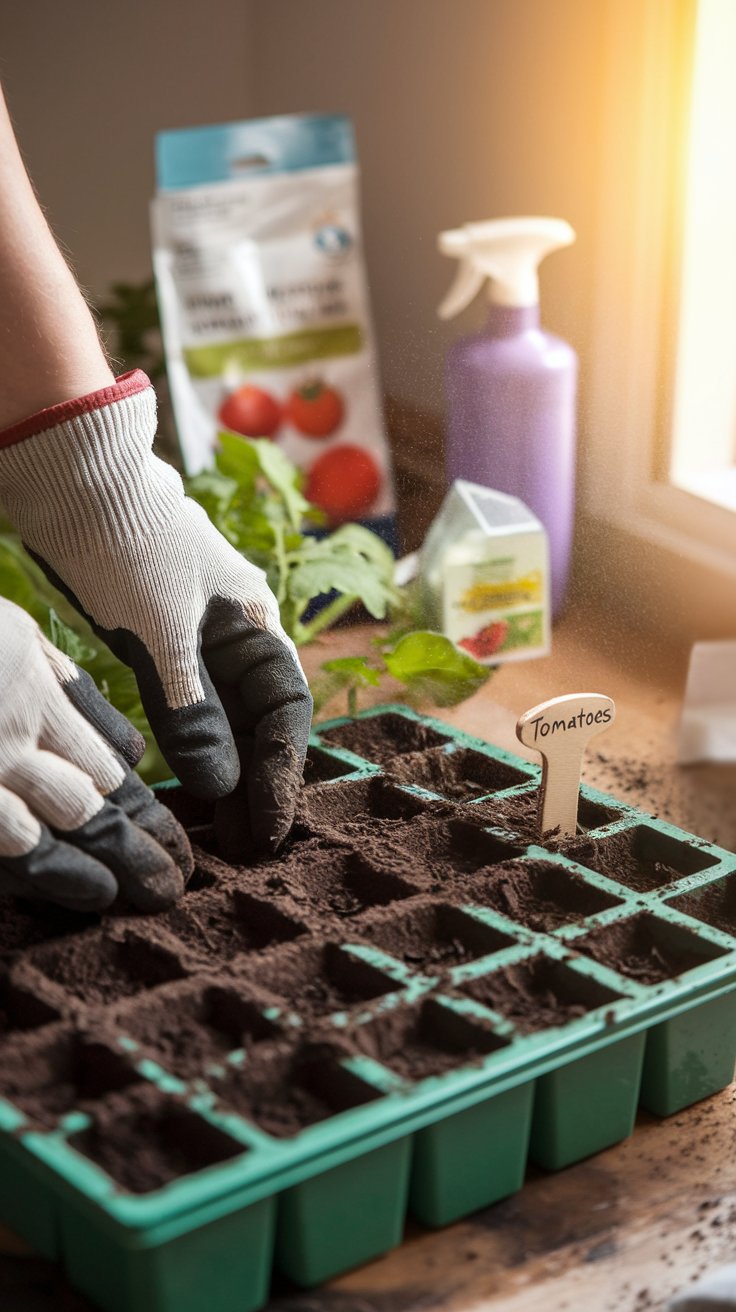
Sow seeds at the appropriate depth as per packet instructions.
Maintain proper spacing to prevent overcrowding.
Label seeds with plant names and sowing dates.
Cover seeds with soil or vermiculite to aid germination and moisture retention.
By following these steps, your seeds will grow strong and healthy. This sets the stage for a successful gardening journey.
Creating the Ideal Growing Environment
Creating the perfect growing space is key for indoor seed starting. We need to manage light, temperature, and humidity to help seedlings grow well.
First, we must ensure enough light. Since natural sunlight is hard to get indoors, artificial grow lights are a good choice. These lights should be on for 12-16 hours a day. Place them just above the seedlings to avoid them becoming too long.
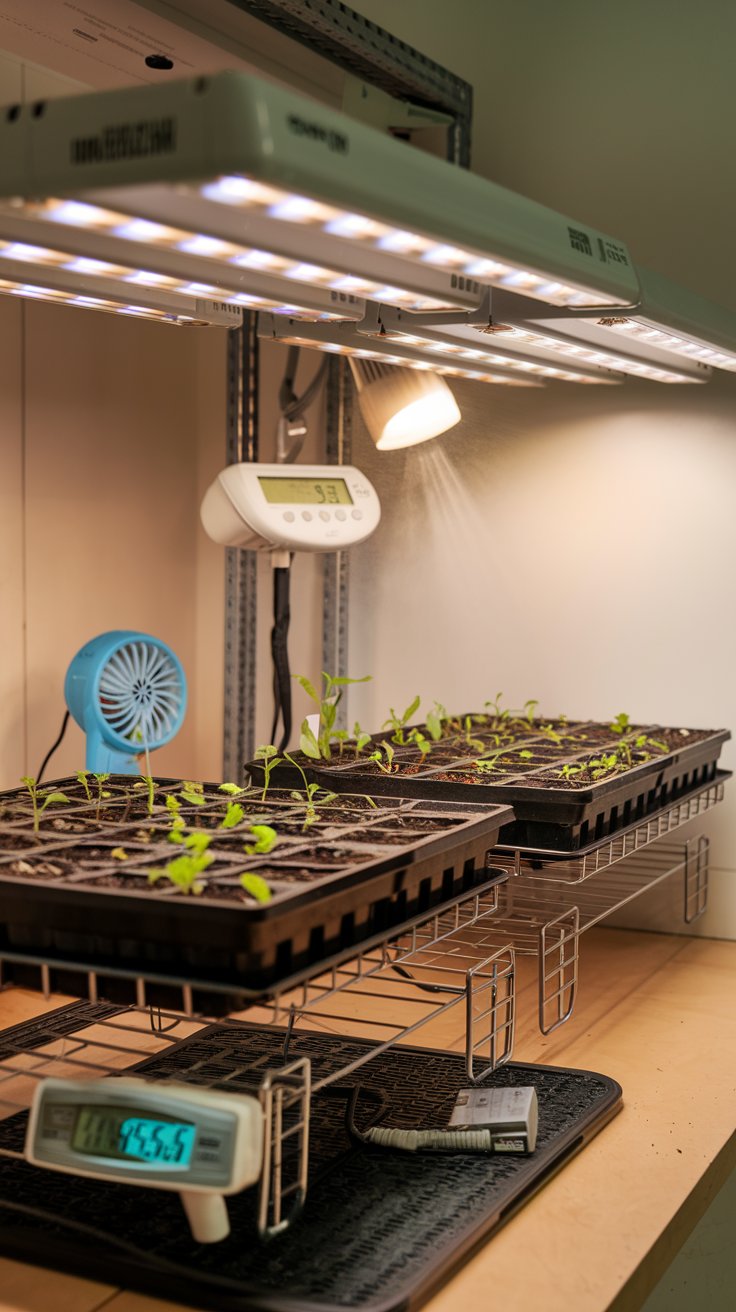
Keeping the temperature right is also crucial. Seeds usually need it warm to grow. If it's too cold, use space heaters or heating mats to keep it between 65-75°F.
Light: Use grow lights positioned closely above seedlings.
Temperature: Maintain 65-75°F using heaters or mats.
Managing humidity is also important. Too much can cause mildew, while too little can slow growth. Use a humidity dome or a tray of water near your seed trays to keep moisture steady.
Indoor gardening tips like using fans can help too. Fans improve airflow and lower the chance of fungal diseases. This small step can greatly help in keeping your growing space healthy.
By following these indoor seed starting tips and gardening advice, we can make a great space for seedlings. This will lead to healthier plants ready for transplanting.
Watering and Fertilizing Techniques
Learning to water and fertilize seeds indoors is key. It's important to keep your seeds nourished and moist. This helps them grow well.
Watering Frequency and Methods
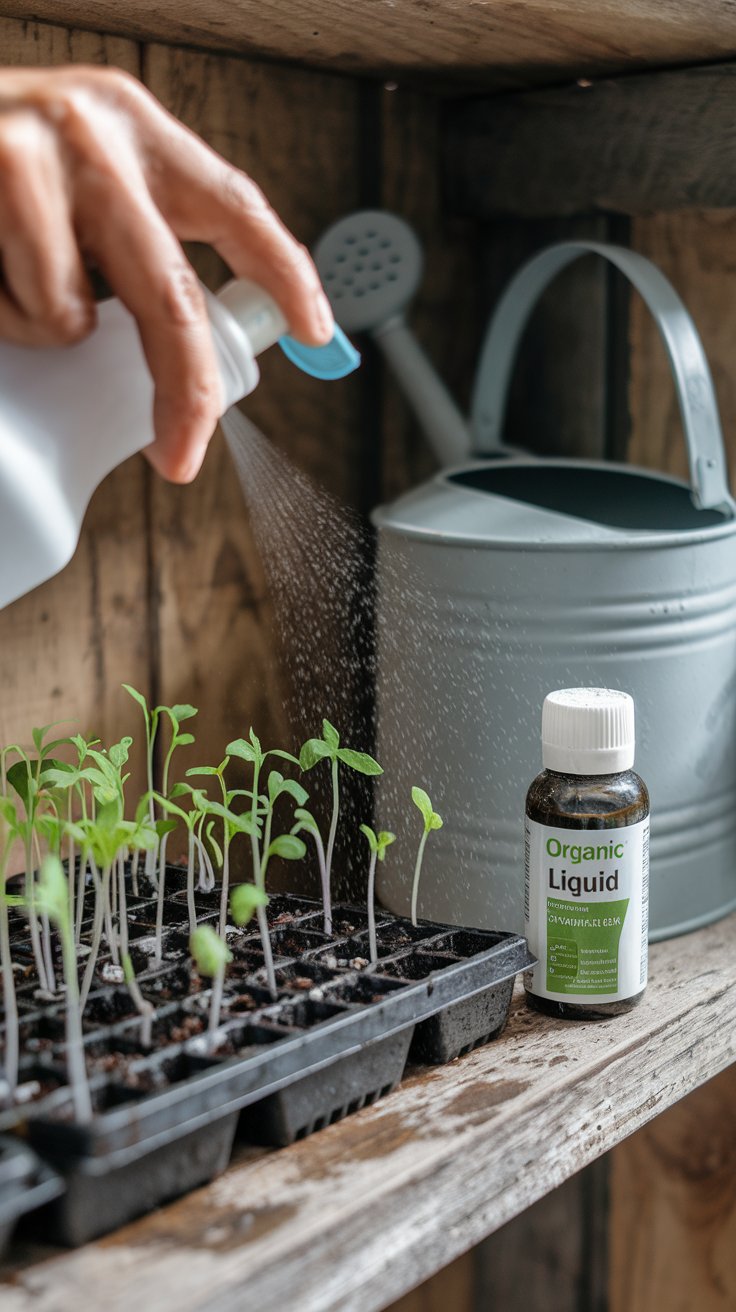
Watering seeds indoors needs care. The soil should be moist but not too wet. A spray bottle works well for small seeds.
As seeds grow, use a gentle watering method. Water at the base to keep leaves dry and prevent mold.
Choosing the Right Fertilizer
Fertilizing seedlings right can boost their growth. Use a balanced, water-soluble fertilizer at a quarter strength. This gives them the nutrients they need without harming them.
As plants get bigger, you can increase the fertilizer amount. This helps them grow even more.
Signs of Overwatering and Underwatering
Knowing the signs of too much or too little water is crucial. Too much water can cause yellow leaves and stunted growth. Too little water makes plants wilt and leaves shrivel.
Spotting these signs early helps fix problems quickly.
By learning these watering and fertilizing tips, you're ready to start seeds indoors. Remember, careful care and attention are key to growing strong seedlings.
Transplanting Seedlings
When your seedlings grow strong indoors, it's time to move them outside. This move is key for their health. It helps them grow even more.
When to Transplant
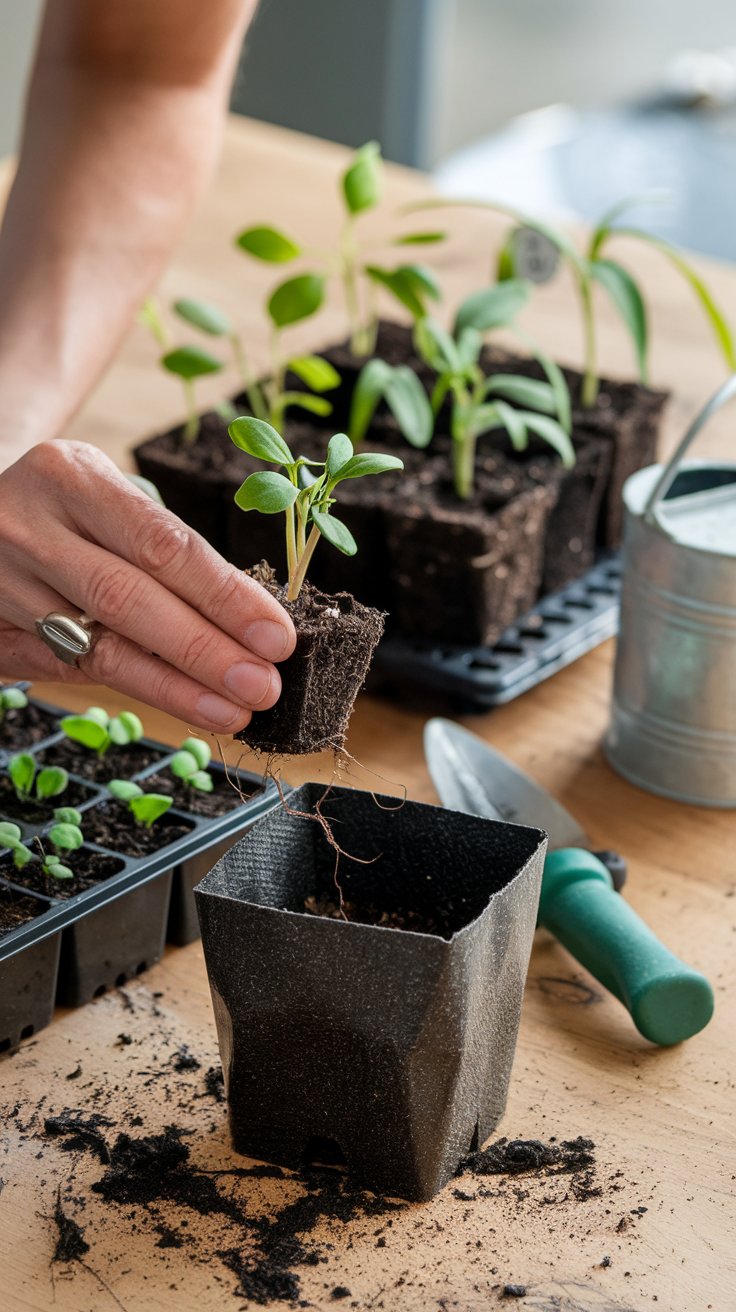
Knowing when to transplant is important. Seedlings are ready when they have two sets of true leaves. This means they're strong enough for the move.
Watching your plants closely helps you pick the best time. This reduces the chance of shock from the move.
Hardening Off Seedlings
Hardening off is crucial for beginners. It means slowly getting your seedlings used to the outdoors. Start by putting them outside for a few hours a day.
Gradually increase the time over a week or two. This helps them get ready for their new home.
Transplanting Into Larger Pots or Garden
When moving seedlings, the right technique is key. Make sure the soil is moist and ready. Gently take the seedlings out of their pots, keeping the roots safe.
Put them in their new home and water well. This helps them adjust to their new place.
By following these tips, your plants will thrive outside. This step-by-step guide helps beginners succeed in gardening.
Common Mistakes and How to Avoid Them
Starting seeds at home can be rewarding but mistakes can slow you down. Here's a beginner seed starting guide to steer clear of common errors. It will help you ensure your seeds germinate well.
Planting Seeds Too Deep or Too Shallow
Planting seeds at the right depth is key. Different seeds need different depths. A good rule is to plant seeds twice their diameter deep. Always check the seed packet for specific instructions.Over or Under Watering
Getting the right moisture is crucial. Too much water can cause rot and fungal issues. Too little water can stop seeds from germinating. Water consistently but not too much to keep the soil moist.Neglecting Adequate Light
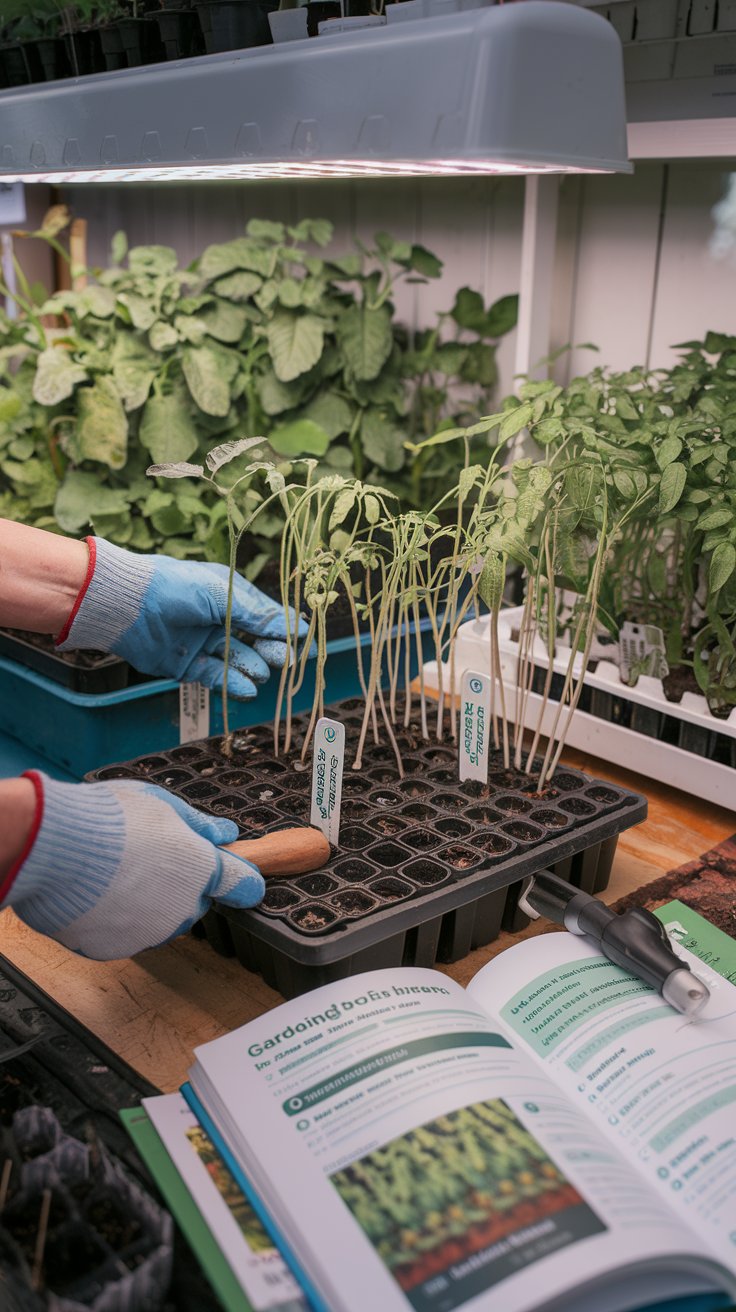
Young seedlings need enough light. Without it, they can become weak and leggy. Using grow lights can help ensure they get enough light for strong growth.Missing Signs of Disease or Stress
Always watch your seedlings for signs of disease or stress. Yellow leaves or mold can be warning signs. Good air circulation and cleanliness can help prevent these problems.
Conclusion
Starting seeds indoors is a rewarding activity for both new and seasoned gardeners. It opens up a wide range of gardening options. This guide has walked you through everything from picking seeds to moving seedlings outside.
Starting seeds indoors lets you control the growing conditions better. It also extends the growing season and lets you grow more plants. The detailed steps in this guide make it easy for beginners to succeed, from making the soil right to setting up the best growing space.
It's important to avoid mistakes like too much water or not enough light. Following this guide will help you grow strong seedlings and a lush garden. So, get your seed trays ready, plant your favorite seeds, and start your indoor gardening journey with confidence!
FAQ
Why should I start seeds indoors?
Starting seeds indoors has many benefits. You get to control the growing conditions and choose from a wider variety of plants. It's especially helpful in areas with short summers.
What are the best seeds to start indoors?
Tomatoes, peppers, and herbs are great for starting indoors. They're easy to grow and are often used in cooking.
What supplies do I need to start seeds indoors?
You'll need seed trays or pots, good soil, grow lights, and heating mats. These tools help create the right conditions for seed germination. This is key, especially in small spaces.
How do I choose the right soil for my seeds?
Look for a soil mix that's loose, fertile, and drains well. Sterilizing the soil can also help prevent harmful pathogens.
How deep should I plant the seeds?
The depth depends on the seed type. Always check the seed pack for specific instructions. Planting too deep or shallow can harm the seeds.
How often should I water the seeds?
Watering frequency varies based on soil and seed needs. Keep the soil moist but avoid waterlogging. Proper moisture management is crucial.
How do I know when to transplant the seedlings?
Seedlings are ready when they have several true leaves and look sturdy. Gradually acclimating them to outdoor conditions is key for successful transplanting.
What are common mistakes to avoid when starting seeds indoors?
Avoid planting seeds too deep or shallow, overwatering, and neglecting light. Also, watch for disease or stress signs. Avoiding these mistakes can boost your success.
How do I label my seeds?
Labeling seeds is important for tracking their growth. Use tags or markers to note seed type, planting date, and other details. This makes managing your garden easier.
How can I create the ideal growing environment for my seeds?
To create the perfect environment, manage light, temperature, and humidity. Use grow lights and heaters to mimic natural conditions. Keeping humidity consistent is also crucial for healthy growth.
What fertilizer should I use for my seedlings?
Use a balanced, water-soluble fertilizer for seedlings. Start fertilizing when they have their first true leaves. Be careful not to over-fertilize, as it can harm young plants.
